
Heritage
Forty years before your living room.
Audio Port wasn’t founded to sell home theater. It earned its way there — one auditorium, one nightclub, one Brooklyn boardwalk at a time.
Lawrence M. Port has spent more than forty years inside sound systems — twenty of them behind the decks as a working DJ, where you learn what a room does to a record the hard way, four nights a week. He didn’t come to speaker building from a catalog. He came to it from rooms that fought back.
The turning point was Richard Dalbec. Dalbec is the engineer behind the sound system at Studio 54 — the room that defined what a night out could sound like — and the inventor of the patented LQt transducer loading at the heart of every Audio Port cabinet. Port had the rooms and the ears; Dalbec had the physics. The partnership built a speaker company in Brooklyn the old way: design it, then go prove it somewhere unforgiving.
The man who voiced Studio 54 spent the next act voicing living rooms. The standards did not relax.
The proving ground was everywhere except a showroom. The Ethan 8 ran school auditoriums and nightclub residencies. It spent a season on the Coney Island boardwalk, playing to open sky and salt air off a single 20-amp outlet — no generator, no panel, just the kind of plug you have behind your couch. Every job answered the same question: how much real output can you get from a cabinet one person can carry and one circuit can feed?
The answer got Audio Port a visit. During one backyard demonstration in Brooklyn — the whole system on an ordinary 15-amp household circuit — the sound carried for miles, far enough that the local precinct came by to find out who, exactly, was throwing a concert. The officers were polite. The point was made.
One backyard. One 15-amp circuit. Sound that carried for miles — and a courtesy call from the NYPD.
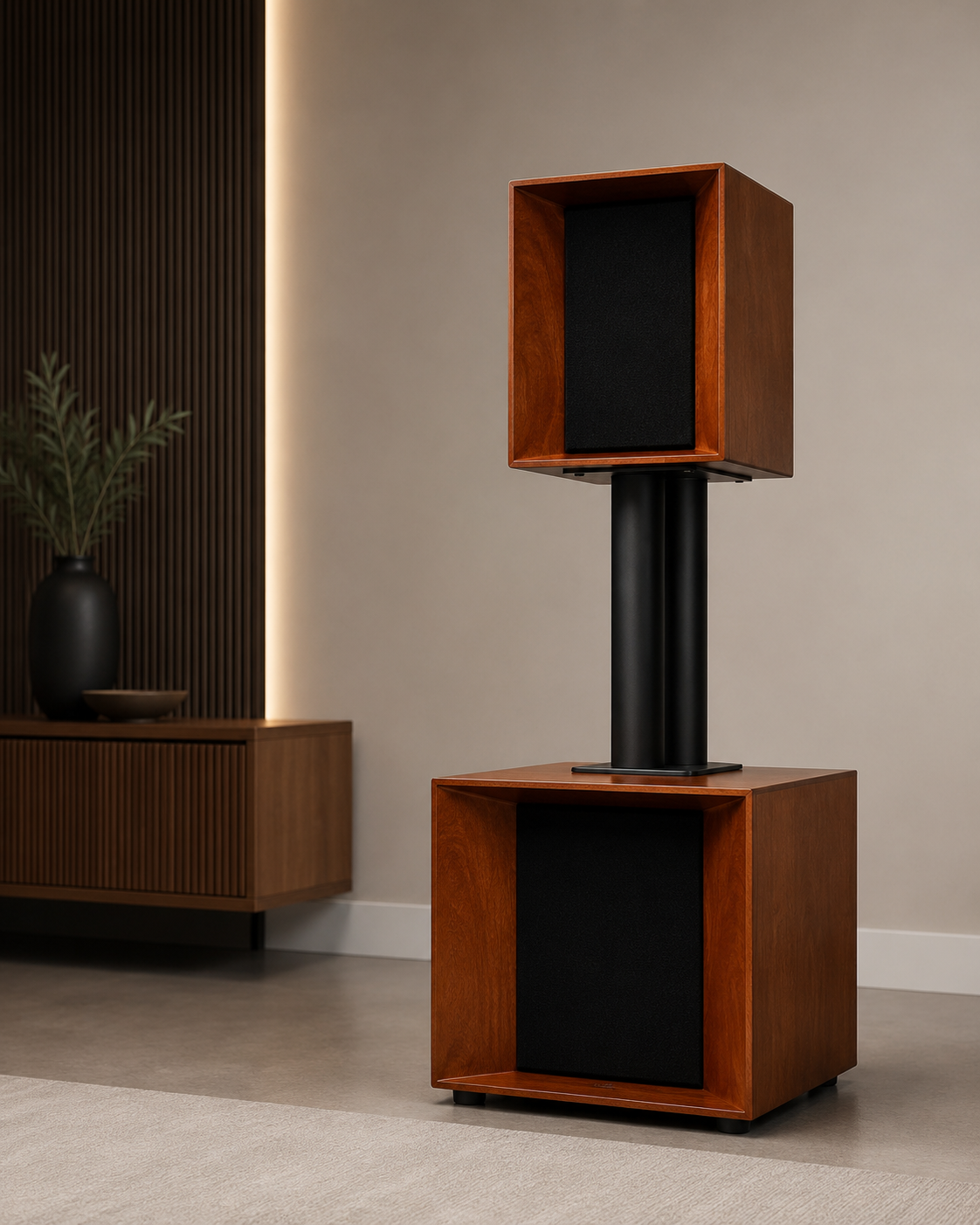
Senator Street, Brooklyn
Every cabinet still comes out of the Brooklyn workshop, built and voiced by the people who will stand in your living room on install day. That history is the warranty behind the spec sheet: when a system has held up on a boardwalk, your Saturday night is not a stress test.
The loud part is optional. The headroom isn’t.
Your room is the next proving ground.
Forty years of rooms, distilled into one consult. It starts with an hour and a tape measure.